Remote Work and Equity in Engineering
Read the Summary Report ↗ Read the Interview Findings ↗ Read the Survey Findings ↗
Project Overview
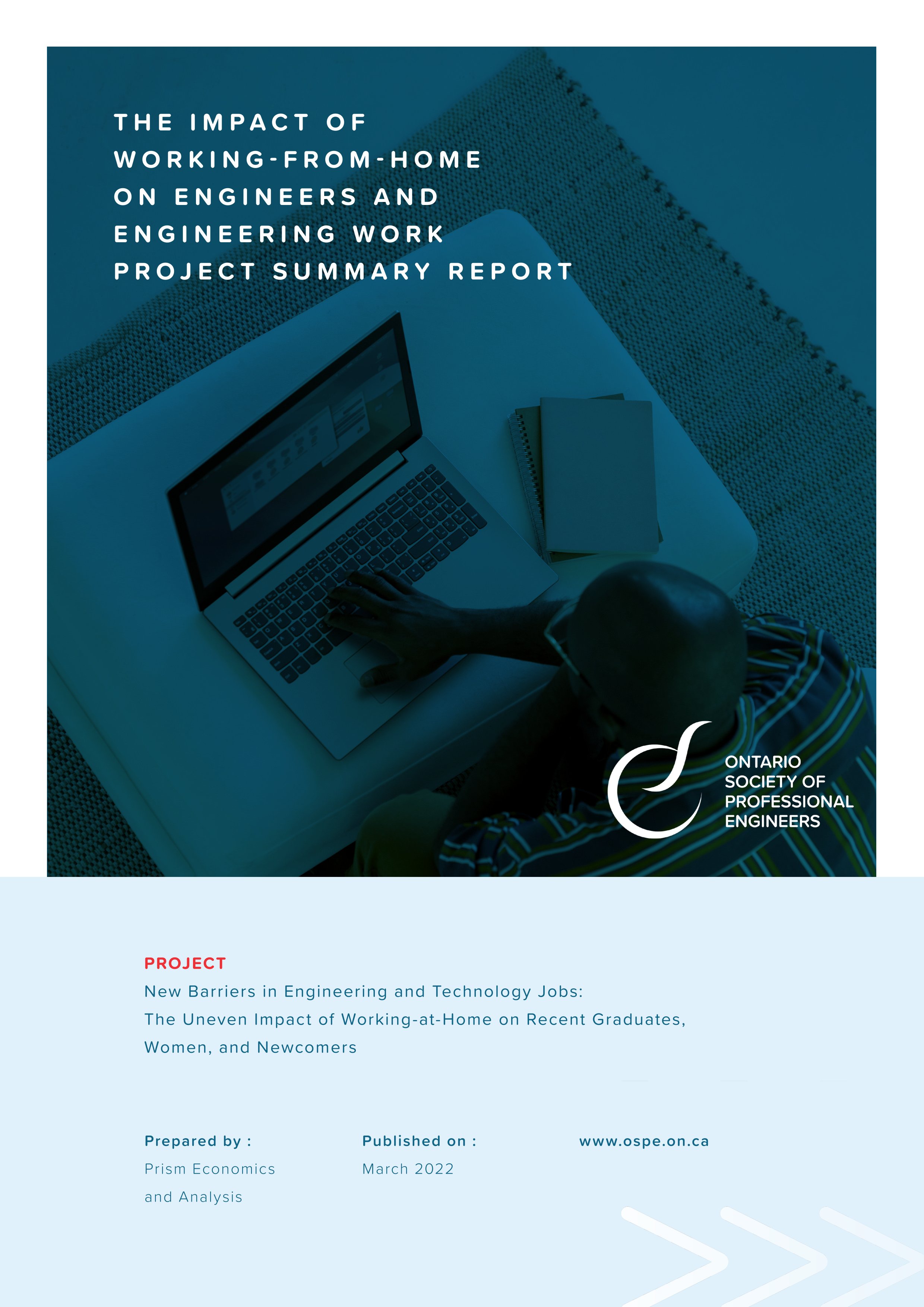
Client: Ontario Society of Professional Engineers (OSPE)
Project: New Barriers in Engineering and Technology Jobs: The Uneven Impact of Working-at-Home on Recent Graduates, Women, and Newcomers
My role: Research, survey analysis, interviews, report development, and presentation
Methods: Survey research, interviews, focus groups, quantitative analysis, and qualitative research
Tools: Excel
This research examined how the transition to working from home affected engineering professionals, with particular attention to the experiences of women, recent graduates, and newcomers.
The study investigated the relationship between remote work, workplace experiences, career development, and organizational practices.
It sought to identify both the benefits of flexible working arrangements and the challenges they presented for different groups of engineering professionals.
Research Approach
The research combined quantitative and qualitative evidence, including:
- A survey of 1,243 engineering professionals.
- Five focus groups involving 16 engineers.
- Nine interviews with engineering managers and human resources professionals.
The study examined differences in the experiences of engineering professionals and explored how working arrangements affected communication, professional development, workplace relationships, and work-life balance.
My Contributions
I contributed to the research and development of the study as part of a collaborative project team.
My responsibilities included:
- Supporting the development of the research methodology and survey instrument.
- Conducting quantitative analysis of survey findings using Excel.
- Participating in interviews and focus groups.
- Analyzing quantitative and qualitative research findings.
- Drafting substantial portions of the research deliverables.
- Supporting the development and presentation of findings to the client.
I also contributed to the preparation and delivery of a presentation to approximately 15–20 OSPE representatives.
Findings and Outcomes
The research identified benefits associated with working from home, including improvements in work-life balance and perceived productivity.
It also identified challenges relating to communication, mentorship, informal learning, and professional development.
These findings informed recommendations concerning flexible working arrangements and the experiences of different groups within the engineering workforce.
The completed research provided OSPE with evidence to support its advocacy and engagement concerning workplace practices in the engineering profession.